
Two videos that turned 3D advertising into a trend
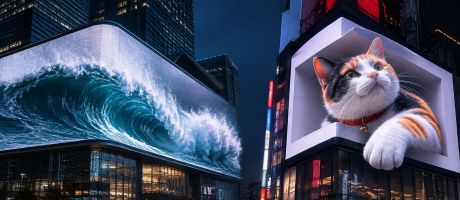
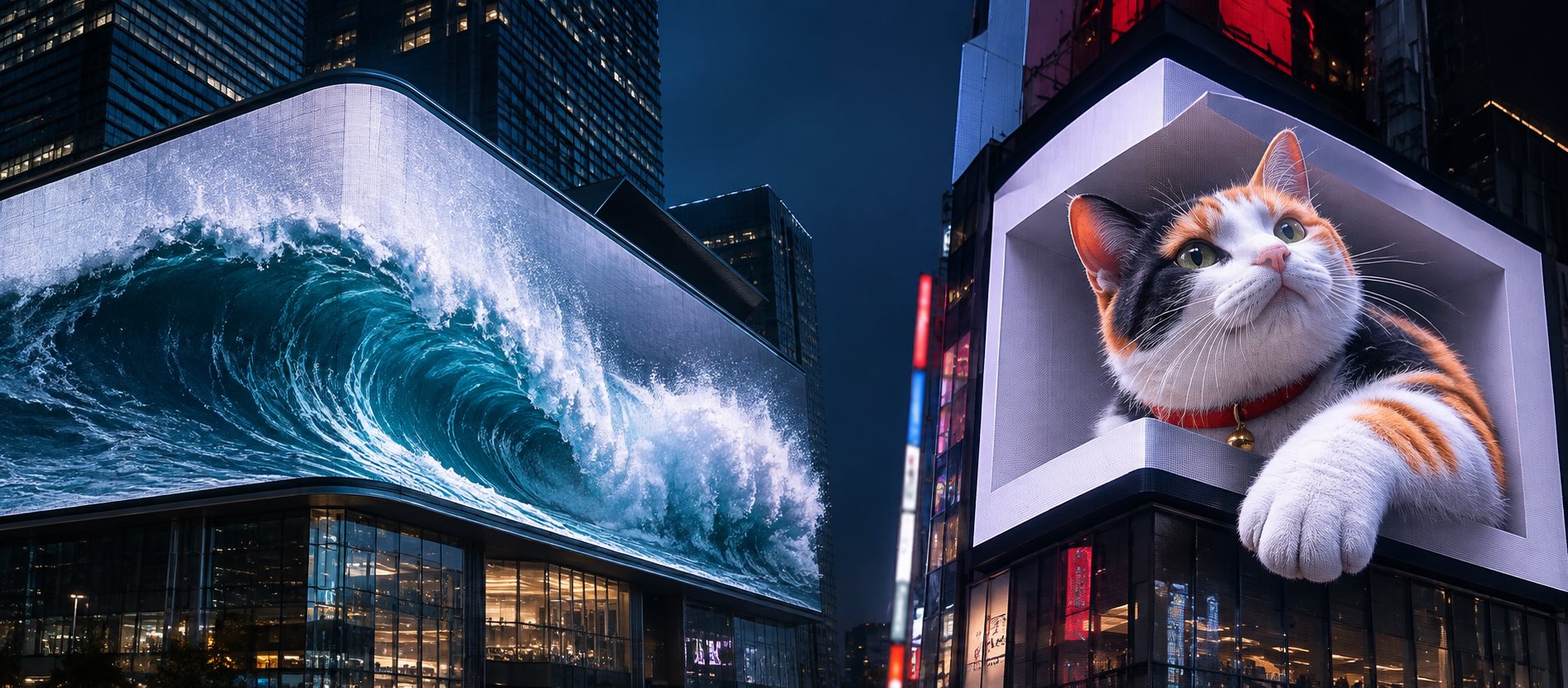
In 2020, a wave appeared on a building facade in Seoul, seemingly crashing against the walls of a giant aquarium. A year later, a giant calico cat “moved in” above an exit of Shinjuku Station in Tokyo. Both videos spread around the world within days and kicked off the trend for anamorphic 3D advertising.
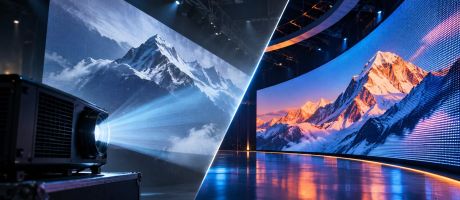
It’s important to understand: these are not holograms or 3D-capable screens. They are ordinary LED screens, and the depth is created entirely by content calculated for the screen’s shape and the viewing point. Let’s look at how it was done and why it worked.
What we’re breaking down
- Wave — an installation by the studio d’strict on the facade of SMTown COEX Artium in Seoul, 2020.
- The Shinjuku cat — a video for the Cross Shinjuku Vision screen above the east exit of Shinjuku Station in Tokyo, 2021.
Step-by-step breakdown
[секции]
Techniques you can use
- A frame within the frame. A drawn “box” edge gives the eye a reference point, so the object appears to break out of it.
- One scene, one emotion. Both works are understood in seconds without text or sound.
- A character or element instead of a product. Attention first, brand second — that’s what makes people film and share.
- Designing for the viewpoint. The illusion is calculated for where the main flow of people looks from.
- Regularity. Recurring appearances turn advertising into a city ritual people come to see.
Limitations of the format
- The illusion fully works only from certain points — from other angles the image looks distorted.
- The best effect comes from large corner and curved screens, and there aren’t many of them.
- Content is made for a specific screen and can’t be moved to other locations without rework.
If you’re planning a 3D video for a screen or media facade, see how we create 3D content for LED screens tailored to a specific location and viewpoint.
1. Wave: an ocean in a glass box
The screen on SMTown COEX Artium is one of the largest outdoor LED screens in South Korea — about 80 metres wide and 20 metres high, wrapping around the corner of the building. d’strict drew a transparent “aquarium” inside it: the wave crashes against its walls, and it seems the water is about to spill onto the street. The sound of the surf strengthens the illusion.
2. The Shinjuku cat: a character with a daily routine
Cross Shinjuku Vision sits on the rounded corner of a building above the east exit of one of the busiest stations in the world. It launched with a video of a giant calico cat that “wakes up” in the morning, appears between ad slots during the day and falls asleep in the evening. A character with a routine turned the screen into a city landmark.
3. How the illusion works
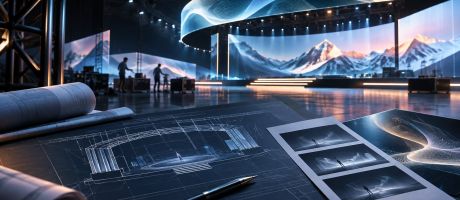
In both cases the 3D scene is rendered for the exact geometry of the screen and the place people view it from. At the junction of two planes the image “bends”, and the brain reads it as depth. That’s why the effect isn’t visible from everywhere, and why these works are made for a specific site and can’t be scaled to other screens without rework.
4. Why the videos went viral
Neither project is advertising in the usual sense. They are short scenes without text, understood in seconds and triggering a simple emotion: surprise, delight, “how did they do that?”. People filmed and posted them themselves, and the social media reach was many times larger than the audience of the square itself.
5. What this means for brands
The viral effect came not from the screen itself but from the idea made for it. Today there are many anamorphic videos, and a simple “object flies out of the screen” no longer surprises. What works is a story, a character, a link to place and time — things that make the video an event rather than just another ad.