
Why this choice shapes the entire project
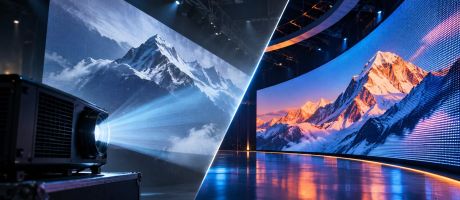
“Projector or LED?” is one of the first questions in any multimedia project. The answer affects not only the picture but also the room requirements, installation time, launch budget and running costs for years ahead. And there is no universally better option: each technology has tasks where it wins hands down.
Below is a comparison across the six criteria that really drive the decision, plus a short decision process.
In short: when to choose which
- Projector — when the image needs to be mapped onto a complex object (a model, facade, sculpture, floor), when you need a very large image in a darkened hall, or when the installation is temporary.
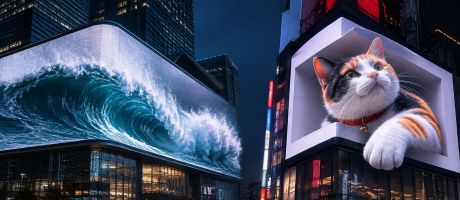
- LED screen — when the room is bright or the installation is outdoors, when the image must be as bright and contrasty as possible, or when the installation runs every day for years.
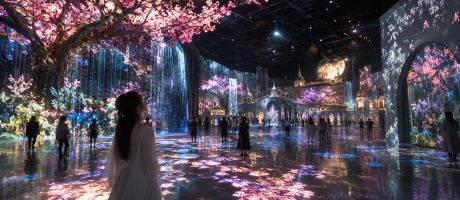
- A combination — immersive halls and stages often use both: LED for the main screen, projection for the floor, walls or objects.
6 comparison criteria
[секции]
Common mistakes
- Projection in a bright room. Windows, daylight and strong lighting wash out projection — the image looks pale no matter how expensive the projector.
- Too large a pixel pitch. An LED screen designed for viewing from 10 metres looks like a grid of dots at a trade show stand viewed from 2 metres.
- Comparing purchase price only. Without maintenance, power consumption and lifespan, the comparison is misleading.
- Forgotten infrastructure. An LED screen needs a structure, floor load capacity and electrical power; a projector needs rigging points and a clear beam path.
How to decide
- Describe the room: light, dimensions, viewing distance, whether it can be darkened.
- Define how long it will run: a few days, a season or years.
- Look at the surface: a flat screen or a complex object.
- Compare the cost of ownership over the whole period, not just the launch price.
- Ask the contractor for a test or visualisation at your venue.
If you’re choosing a solution for a specific space, see our projects with video mapping and LED screens — we’ll suggest the option that fits your task and budget.
1. Brightness and ambient light
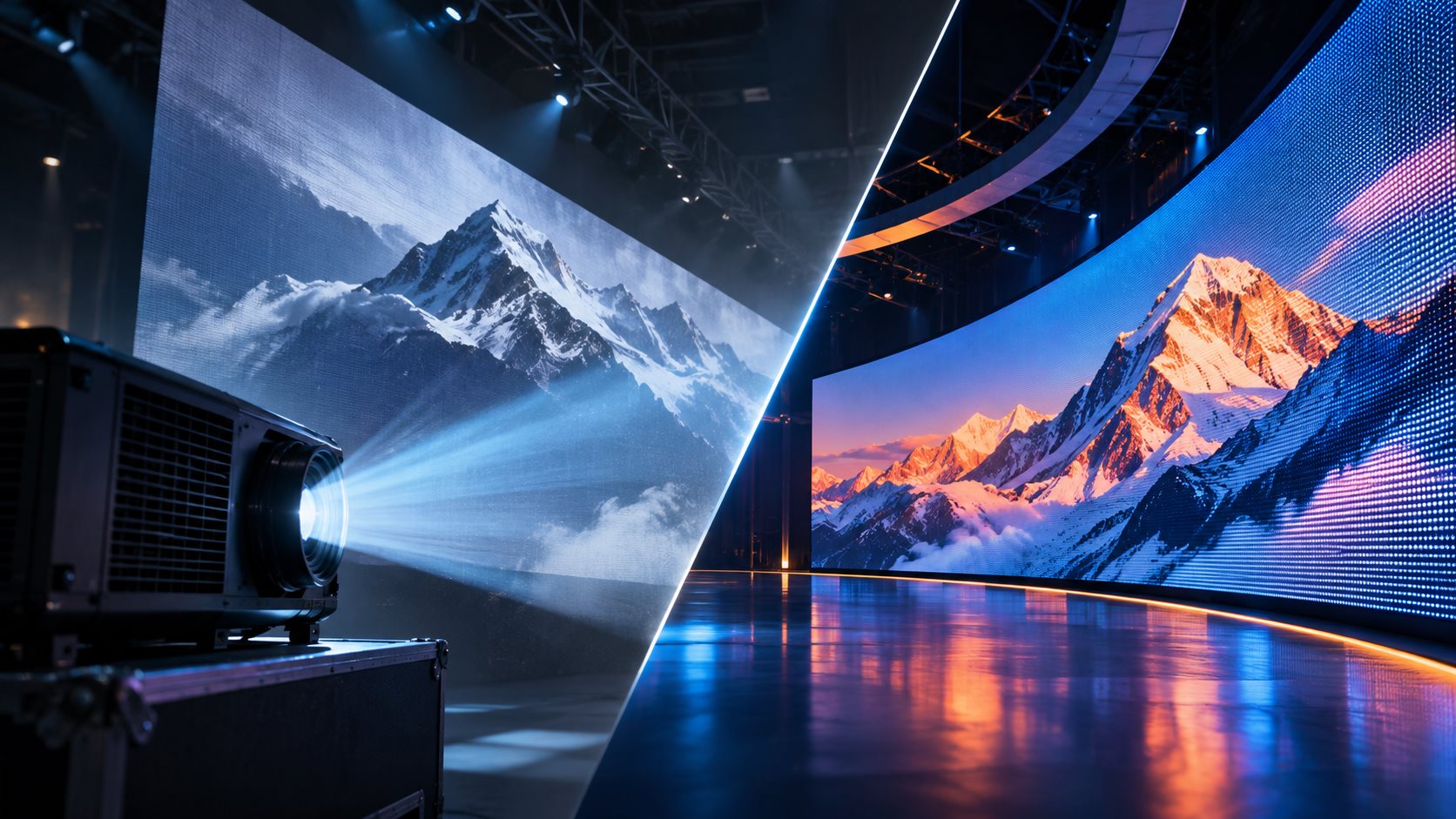
The key difference is brightness. An LED screen emits light itself and stays readable even outdoors in daylight. Projection is reflected light: the more ambient light, the paler the image. That’s why projectors work well in darkened halls, evening shows and museums, while LED suits atriums, trade shows with standard lighting and outdoor locations.
2. Resolution and viewing distance
An LED screen’s sharpness depends on pixel pitch — the distance between LEDs. The closer the viewer, the smaller the pitch needs to be, and the more expensive the screen. With projection, resolution comes from the projector, and its “grain” is less noticeable up close. For interactive surfaces that people approach closely, this needs to be considered early.
3. Surface shape
Projection can be placed on any surface: a model, facade, sculpture, floor, dome. That’s what video mapping is built on. LED screens can be flexible or cornered, but they still consist of modules and don’t suit complex shapes. If the idea is to bring an object to life, you almost always need a projector.
4. Installation and space
A projector needs a clear beam path: people walking between the projector and the surface cast shadows. It can be ceiling-mounted and hidden. An LED screen needs a supporting structure, and large screens need load calculations and dedicated power. On the other hand, it doesn’t depend on where viewers stand.
5. Lifespan and maintenance
Modern laser projectors are rated for tens of thousands of hours, and LED screens typically last even longer. But projectors need periodic cleaning and alignment, especially when several are blended into one image. An LED screen is maintained by replacing individual modules — it’s important to keep spares from the same batch to avoid colour differences.
6. Cost of ownership
For a comparable image size, an LED screen usually costs more upfront, while a projection system costs less but requires the right conditions and maintenance. A fair comparison counts the full cost over the whole period: equipment, installation, power, maintenance, spare parts and replacement. For a temporary project rental wins; for a permanent one, purchase does.