
Why some stands draw crowds while others stay empty
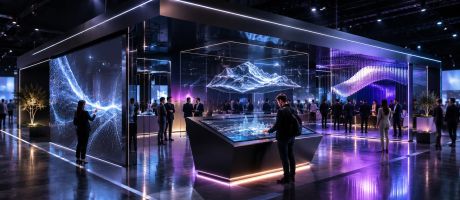
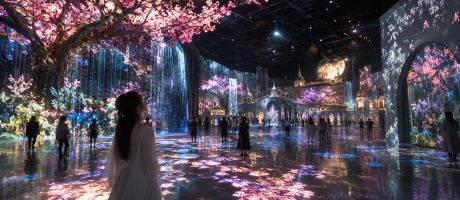
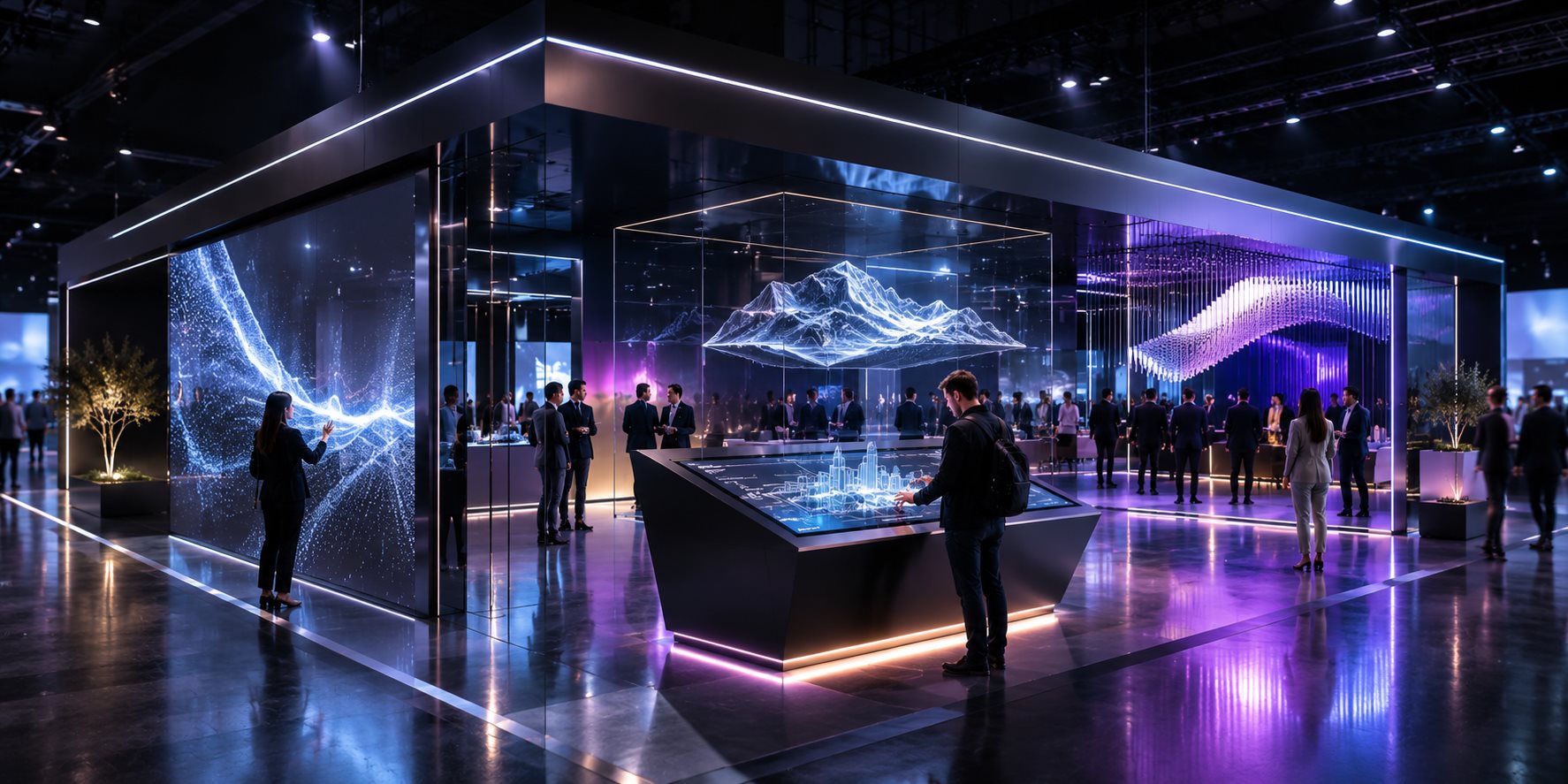
At a trade show, a visitor has 3–5 seconds to decide whether to approach a stand or walk past. In that time they don’t read text or browse a catalogue — they react to movement, light, people and things they can try with their own hands.
That’s why a good stand isn’t about the biggest floor space or the most expensive materials. It’s about a clear idea that reads from a distance and a scenario: what visitors will see, do and take away. Let’s look at what such a stand is made of and how to prepare for it.
What a turnkey stand includes
- Concept. The company’s key message and an idea that can be understood in seconds.
- Design and 3D visualisation. Layout, zones, lighting and navigation — before production starts.
- Production and construction. Structures, furniture, graphics, electrics, installation and dismantling.
- Multimedia and content. Screens, interactivity, videos — everything that brings the stand to life.
- On-site support. Technical support during the show and quick fixes.
6 techniques that bring people to your stand
[секции]
What drives the budget
- Area and stand type. An island stand costs more than a corner one; a two-storey stand more than a single-level one.
- Materials and complexity. Custom shapes and suspended elements increase cost and lead time.
- Multimedia. LED screens, projection and interactivity are a separate line — but they deliver the main impact.
- Content. Videos and interactive scenarios are created for the task and reused afterwards.
- Logistics and installation. Especially when the show takes place in another city or country.
Mistakes that make a stand fail
- Too much text. Nobody reads lists of services on walls — show them on a screen or in a brochure.
- Closed entrance. A counter across the aisle and staff standing like a wall push visitors away.
- No script for staff. People come up, but the team doesn’t know what to offer or how to collect a contact.
- One-off content. A video made only for the show isn’t used afterwards — and the budget works for just three days.
- Late start. When preparation begins three weeks out, there’s simply no time for an idea and testing.
Checklist: preparing in 2–3 months
- Define the goal of the show: leads, dealers, awareness or a product launch.
- Formulate one key message for the stand.
- Approve the concept and 3D visualisation.
- Choose 1–2 interactive formats for your audience.
- Prepare content and test it on the actual equipment.
- Brief the team: conversation script and contact collection.
- Follow up on contacts within 3 days after the show — while they still remember you.
If you’re preparing for a trade show, see how we build turnkey exhibition stands — from concept and 3D visualisation to multimedia and on-site installation.
1. Movement visible from the aisle
People notice movement before text or a logo. A large LED screen or projection with a dynamic video works like a beacon, visible from the other end of the hall. The video should read without sound or captions — in the noise of a trade show nobody will hear or read them.
2. Interactivity people want to join
A touch screen, a reaction game, a product configurator or a quiz gives visitors a reason to come over and stay. Good interactivity takes 30–60 seconds, needs no instructions and leads to a conversation with a sales manager. More formats in interactive solutions for events.
3. A product that comes to life
If the product is large, complex or can’t be brought to the show, it can be presented through projection mapping on a model, 3D animation or a hologram. Visitors see how a mechanism is built or how an object works — something a photo can’t show. Video mapping is ideal for this.
4. Augmented reality instead of a catalogue
With augmented reality you can place equipment at full scale right on the stand or look inside it on a tablet. It saves space and logistics: no need to ship heavy samples, and visitors get a stronger impression than from a catalogue.
5. A photo zone people actually shoot
Visitors happily take photos where it’s beautiful and unusual. A branded photo zone with lighting, mirrors or an interactive effect generates social media posts and reach far beyond the show. The key is to make it part of the stand’s overall idea rather than an afterthought.
6. Collecting contacts without forms
Contacts are the most valuable result of a trade show. Instead of paper business cards, use a QR code, registration in an interactive game or a prize draw: the contact goes straight into your database with a note on what the visitor was interested in. After the show, managers call warm leads instead of cold ones.