
Why AI has become the main wow factor of events
Just a couple of years ago, neural networks were a topic for conference talks. Today they are part of the events themselves: guests pose in AI photo booths, talk to digital hosts and watch an image being generated on screen in real time from their own prompt.
The main advantage of AI at an event is personalisation. Every guest gets something created just for them — and wants to share it. Let’s look at which formats work, what tasks they suit and how to avoid turning the technology into a gimmick.
What AI brings to an event
- A personal experience. Every guest gets a unique result: a portrait, a video, an answer, a character.
- Content for social media. Results people want to post — free reach for the event.
- Speed. Neural networks help create visuals, videos and scenarios faster during event preparation.
- A news hook. “The first event with a digital host” is a story the media will pick up.
6 AI formats for events
[секции]
Which events it suits
- Corporate events. Personal AI portraits of employees, interactive experiences with the company’s history.
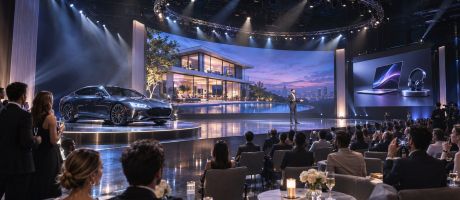
- Conferences and forums. A digital host, an AI assistant for attendees, generative stage visuals.
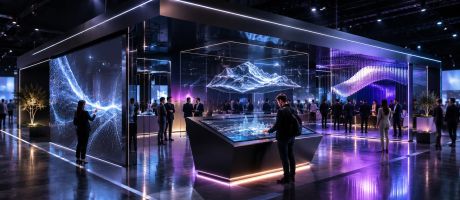
- Exhibitions and promo. A branded AI photo booth as a magnet for stand visitors.
- Presentations and launches. Generative visual effects and videos created with neural networks.
Mistakes when using AI
- Technology without an idea. “Do something with a neural network” is a poor brief. Start with the event’s goal, then choose the format.
- Long waiting times. If a result takes several minutes to generate, queues and frustration build up.
- No moderation. Generation from guest prompts needs filters, or something inappropriate may end up on screen.
- Lost branding. The result should carry the company’s style and identity, not look like a random picture from the internet.
- No on-site test. Lighting, internet and load on event day differ from the office — the system must be tested in advance.
If you want to bring artificial intelligence into your event, see how we create AI content and neural-network-based interactive experiences — from idea to a working installation on site.
1. AI photo booth
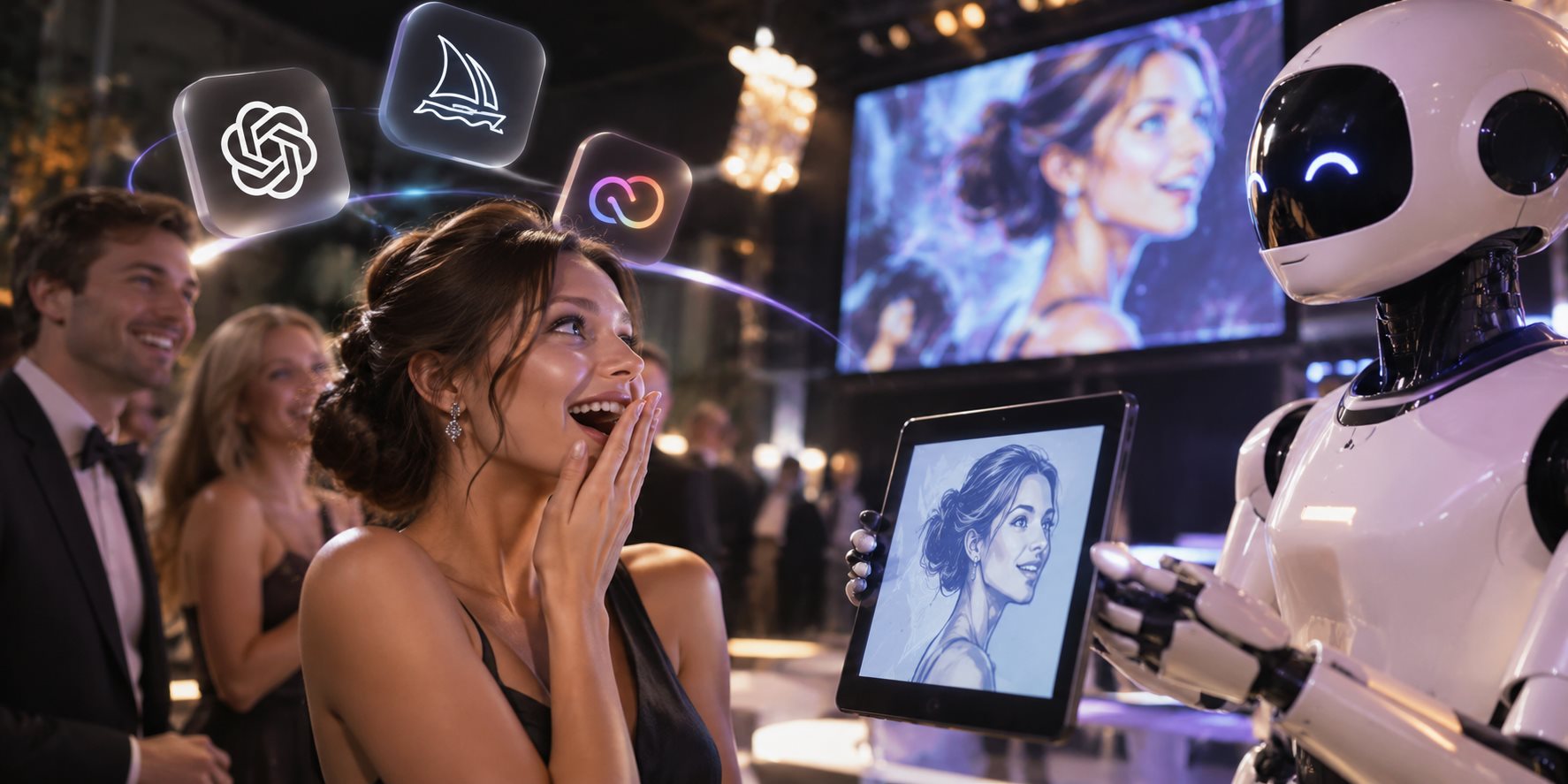
A guest takes a photo and in seconds a neural network turns them into a character in the style of the brand, an era or a film. The result goes straight to their phone via QR code and on to social media. It’s the most popular format: simple, fast and with ready-made content for reach.
2. Digital avatar and host
A digital human can host the programme, greet guests at the entrance or answer questions about the company. A digital avatar speaks several languages, works without breaks and becomes a news story in its own right. It can even be modelled on a real speaker or the company’s founder.
3. Generative installation
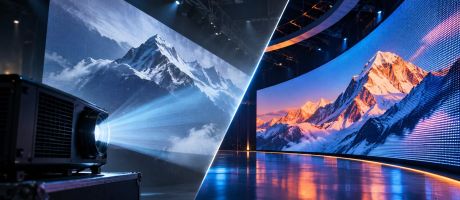
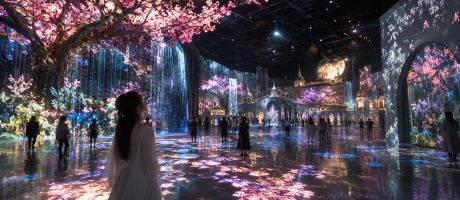
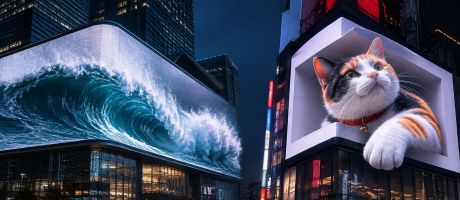
The image on a big screen or media facade changes in real time in response to guests’ movement, sound, voting or text prompts. Every minute of the show is unique, and guests feel like co-creators. The format works well in forum foyers, at openings and in immersive spaces.
4. Personal videos for guests
After the event, each attendee receives a short video with their name, photo or highlights of the evening, assembled by a neural network. It’s a strong finishing touch for corporate parties and conferences: people share the videos and the event keeps living on social media for days.
5. AI assistant for attendees
A chatbot or voice assistant on screen answers questions about the programme, speakers, navigation and the company’s products. It takes the load off organisers and the registration desk, and at the end of the event provides analytics: what guests asked and what interested them most.
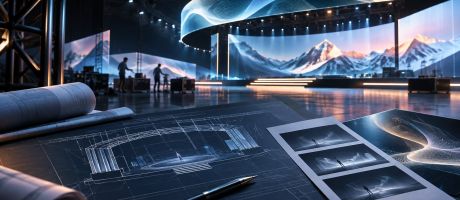
6. AI-assisted event content
Neural networks speed up preparation: openers, stage backgrounds, concept art and videos can be created faster and in more variations. What matters is that the final result goes through designers’ hands — then the content looks consistent and on-brand. More in content for events.